
Marble Stone Cleaning Tips for Australian Homeowners
Marble brings a refined, timeless appearance to kitchens, bathrooms, floors and feature areas. However, because it is a natural stone, it requires careful maintenance to retain its finish and prevent staining, etching or surface damage.
For Australian homeowners, effective marble stone cleaning involves more than wiping the surface with a standard household product. The correct cleaning method depends on the type of marble, its location, the finish and the level of daily use.
Understand the Type and Finish of Your Marble
Not all marble surfaces respond to cleaning in the same way. Polished marble has a smooth, reflective finish, while honed marble has a softer, matte appearance. Different varieties may also vary in porosity, meaning some absorb moisture and spills more readily than others.
Before using any cleaner, check the stone supplier’s care instructions or test the product on an inconspicuous area. This reduces the risk of discolouration, dull patches or permanent surface damage.
Remove Dust and Grit Regularly
Fine dust, sand and dirt may seem harmless, but they can scratch marble when dragged across the surface. This is particularly important for marble flooring in entryways and high-traffic areas.
Use a clean microfibre cloth, soft-bristled broom or vacuum cleaner with a suitable hard-floor attachment. Avoid abrasive brushes and worn vacuum heads that may mark the stone.
For benchtops and vanities, remove loose particles before wiping the surface with a damp cloth.
Use a pH-Neutral Marble Cleaner
Marble is sensitive to acidic and highly alkaline substances. Common household products such as vinegar, lemon juice, bleach and strong multipurpose cleaners can react with the calcium carbonate in the stone, causing etching or a dull appearance.
For routine marble stone cleaning, choose a pH-neutral product specifically formulated for natural stone. Follow the manufacturer’s dilution and application instructions, and avoid leaving excess moisture on the surface.
A safe general cleaning process includes:
- Removing loose dust and debris.
- Applying a diluted pH-neutral stone cleaner.
- Wiping gently with a soft microfibre cloth or mop.
- Rinsing the surface if required.
- Drying it thoroughly to reduce streaks and water marks.
Respond to Spills Immediately
Marble can absorb liquids quickly, particularly when it is unsealed or the sealant has deteriorated. Coffee, wine, cooking oil, cosmetics and acidic foods may leave stains or etch marks if they remain on the surface.
Blot spills immediately with a clean, absorbent cloth. Do not rub aggressively, as this can spread the liquid across a larger area.
It is also important to distinguish between a stain and an etch mark. A stain usually changes the colour of the stone, while etching affects the surface finish and may appear as a pale, rough or dull patch. Etching generally requires professional polishing rather than ordinary cleaning.
Treat Stains Carefully
Different stains may require different treatments. Oil-based marks, organic stains and rust should not all be treated with the same product.
A poultice may sometimes be used to draw a stain out of porous stone. However, incorrect ingredients or application methods can worsen the damage. Baking soda is mildly abrasive and alkaline, so it should not automatically be treated as a safe solution for every marble surface.
For valuable, extensively stained or highly visible marble, professional assessment is the safer option.
Keep the Surface Dry
Standing water can cause streaking, mineral deposits and gradual deterioration around joints or edges. After mopping floors or wiping benchtops, dry the surface with a soft, clean cloth.
In bathrooms, use adequate ventilation and regularly dry areas exposed to water. Mats should be breathable and kept clean, as trapped moisture and grit underneath them can affect the marble.
Check Whether the Marble Needs Sealing
A penetrating sealer can help slow the absorption of moisture and staining substances, but it does not make marble completely stain-proof or resistant to acids.
The appropriate sealing frequency depends on the stone’s porosity, location, usage and the type of sealer previously applied. A fixed schedule of every six or twelve months may be unnecessary for some surfaces and insufficient for others.
A simple water-drop test can provide a basic indication. Place a few drops of water on a clean, dry section of marble. If the stone darkens quickly, the surface may require resealing. For a reliable assessment, consult a natural-stone specialist.
Avoid Common Marble Cleaning Mistakes
Homeowners should avoid:
- Using vinegar, lemon or acidic bathroom cleaners
- Applying bleach or harsh degreasers
- Scrubbing with abrasive pads or stiff brushes
- Allowing spills to remain on the stone
- Using excessive water during floor cleaning
- Applying waxes or sealers without checking compatibility
- Attempting to polish etched marble with unsuitable household products
These mistakes can damage the finish and make professional restoration more difficult.
When to Arrange Professional Marble Cleaning
Professional treatment may be necessary when the marble has deep staining, widespread dullness, scratches, uneven polishing or significant etching.
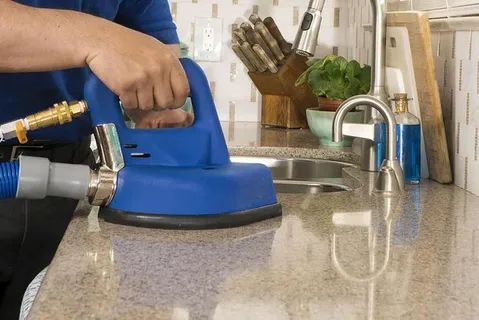
Specialists can assess the stone and recommend appropriate marble stone cleaning, stain removal, honing, polishing or sealing. Professional equipment can also restore larger floor areas more consistently than domestic cleaning methods.
Frequently Asked Questions
How often should marble be cleaned?
Dust and loose debris should be removed regularly. Frequently used benchtops may need gentle cleaning each day, while floors can be cleaned according to traffic levels. Always use a suitable pH-neutral stone cleaner.
Can vinegar be used to clean marble?
No. Vinegar is acidic and can etch marble, leaving dull or rough patches that ordinary cleaning cannot remove.
Is baking soda safe for marble?
Baking soda should be used cautiously. It is mildly abrasive and alkaline, so repeated or aggressive use may affect the finish. A stone-safe stain treatment or professional advice is preferable.
Does sealing prevent all marble stains?
No. Sealing slows absorption but does not make marble completely resistant to staining, scratching or acidic substances.
Can damaged marble be restored?
Many stains, scratches and dull areas can be improved through professional honing, polishing or restoration. The appropriate treatment depends on the depth and type of damage.
With regular dust removal, prompt spill management and carefully selected cleaning products, marble can retain its appearance for many years. The key is to use methods developed for natural stone rather than relying on aggressive household cleaners or unverified stain-removal remedies.