






























Fire Rated Steel Columns: Understanding Their Role in Building Safety
Steel is widely used in commercial, industrial, and high-rise construction because of its strength, durability and design flexibility. However, when exposed to intense heat, steel can gradually lose its structural strength and stiffness. For this reason, fire-rated steel columns are an important consideration in buildings where structural elements must maintain their performance during a fire. Proper fire protection helps provide additional time for evacuation and emergency response while reducing the risk of premature structural failure.
Why Steel Columns Need Fire Protection
Steel does not normally burn, but its mechanical properties change significantly as its temperature increases. During a serious building fire, unprotected steel can become hot enough to lose much of its load-bearing capacity. This may cause columns to deform or buckle, potentially affecting floors and other connected structural elements.
Fire protection systems are therefore used to help control the temperature rise of structural steel. The objective is not to make steel completely immune to heat, but to keep it within an acceptable temperature range for the required fire-resistance period.
What Does a Fire Rating Mean?
A fire rating generally indicates how long a building element or protected structural component is designed to maintain specified performance under standard fire exposure conditions. The required rating depends on factors such as building classification, occupancy, construction type, structural design and applicable regulations.
A fire-rated column system must be assessed as a complete system rather than simply considering the steel section itself. The steel profile, protection material, thickness, installation method and supporting details can all influence performance.
Common Protection Methods for Steel Columns
Several approaches can be used to protect structural steel from fire.
Intumescent Coatings
Intumescent coatings are specialised materials applied to steel surfaces. When exposed to high temperatures, the coating expands and forms an insulating char layer. This layer slows heat transfer to the steel and can help maintain its structural performance for the required period.
One advantage of intumescent coatings is that they can provide fire protection without significantly changing the appearance or dimensions of exposed steelwork. They are often considered where architectural finishes are important.
Board Protection
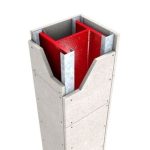
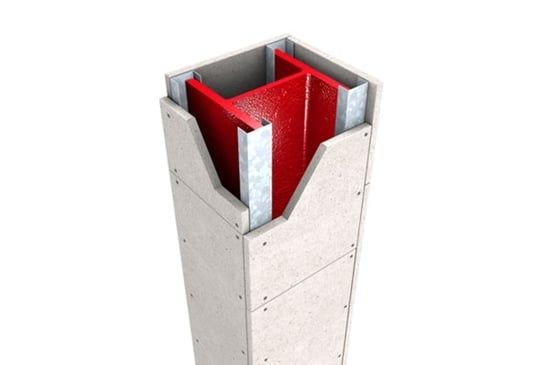
Fire-resistant boards can be installed around steel columns to create a protective enclosure. These systems may use specially manufactured boards designed to provide thermal insulation and maintain a specified fire-resistance period.
Board systems can be useful where a robust protective encasement is required, although careful detailing is necessary around connections, joints, and penetrations.
Spray-Applied Protection
Some structural steel systems use spray-applied fire-resistant materials. These products form a protective layer around the steel and can be suitable for particular construction environments. Surface preparation, application thickness, and environmental conditions can affect the final performance.
Factors That Affect Fire Protection Performance
The performance of protected steel columns depends on more than the selected product. The size and shape of the steel section, exposed surface area, number of exposed sides and required fire-resistance period can all influence the protection requirements.
Installation quality is equally important. Coatings need the correct thickness, while board systems require properly sealed joints and appropriate fixing methods. Damage caused during construction or later building work should also be identified and repaired using compatible materials.
Inspection and Maintenance
Once fire protection has been installed, regular inspection can help ensure that the system remains in suitable condition. Building alterations, mechanical damage, corrosion, service installations and other work can compromise protection around structural steel.
Inspection should consider visible damage, missing sections, coating condition, joints, connections and areas where other building services may have penetrated protected assemblies. Keeping installation and maintenance records can also assist with future inspections and compliance documentation.
Supporting Structural Fire Safety
Fire protection for structural steel is one part of a broader passive fire safety strategy. It works alongside fire-rated walls and floors, compartmentation, fire stopping, fire doors and other measures designed to restrict fire and smoke movement.
For designers, builders and property managers, understanding the behaviour of structural steel in fire conditions is essential when selecting appropriate protection systems. Correct specification, installation, inspection and maintenance can help ensure that protected columns perform as intended when they are most needed.
